-->

Safety & Power Questions & Answers

BUILD LEARN SHARE

Turn β€œwhy won’t it work?” into your next working circuit.

Follow a practical learning path, search real troubleshooting answers, share your builds, and keep reliable bench references close at hand.

Subscriber workbench
33answered questions
10maker builds
12+learning resources
Pick a starting point

Choose your maker path

Focused guides connect the concepts, tools, and safety checks needed for a confident next build.

Maker challenge: Build a safer, cleaner breadboard power layout

Label the rails, add current limiting, verify polarity, then share one improvement you made.

Community knowledge bench

Find an electronics answer

Search by symptom, part, or project. Every editorial answer is visible for makers and search engines.

Safety & PowerTechCrate editorial answer

Preventing Thermal Runaway in Power Transistors & Regulators

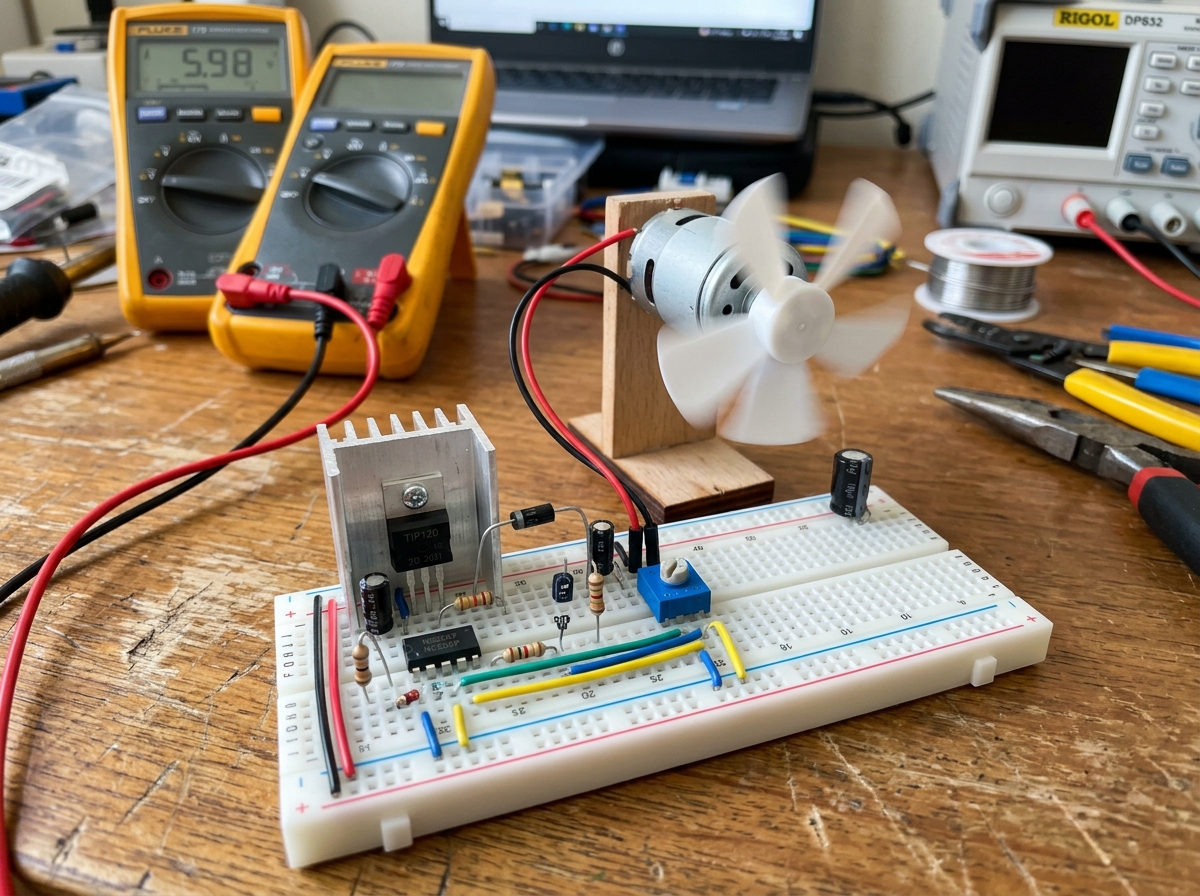
Why does my 7805 voltage regulator or TIP120 Darlington transistor get scorching hot under heavy load?
TechCrate editorial answer
Linear voltage regulators (like the 7805) and power transistors convert unused excess voltage directly into heat power: P_heat = (V_in - V_out) * I_load. For example, dropping 12V down to 5V at 1 Amp generates 7 Watts of pure heat energy! Without a aluminum heatsink, the semiconductor junction quickly exceeds 125Β°C, triggering thermal shutdown or permanent failure. See the full answer β†’
Want to see the full answer with all the details?

Unlock this and 100s of resources + your personal AI circuit trainer!
Safety & PowerTechCrate editorial answer

NPN Transistor Switching vs Amplification (2N3904 / 2N2222)

How do I use an NPN transistor as a current switch for motors or relays instead of an amplifier?
TechCrate editorial answer
To use an NPN transistor (like 2N3904 or 2N2222) as a switch, you operate it in "Saturation" mode (fully ON) or "Cutoff" mode (fully OFF). In saturation mode, the Base-Emitter current is sufficient to make the Collector-Emitter path act like a closed switch with near-zero resistance (~0.2V drop). Always place a flyback diode across inductive loads like motors or relays to prevent inductive voltage spikes from damaging the transistor. See the full answer β†’
Want to see the full answer with all the details?

Unlock this and 100s of resources + your personal AI circuit trainer!

Safety & PowerTechCrate editorial answer

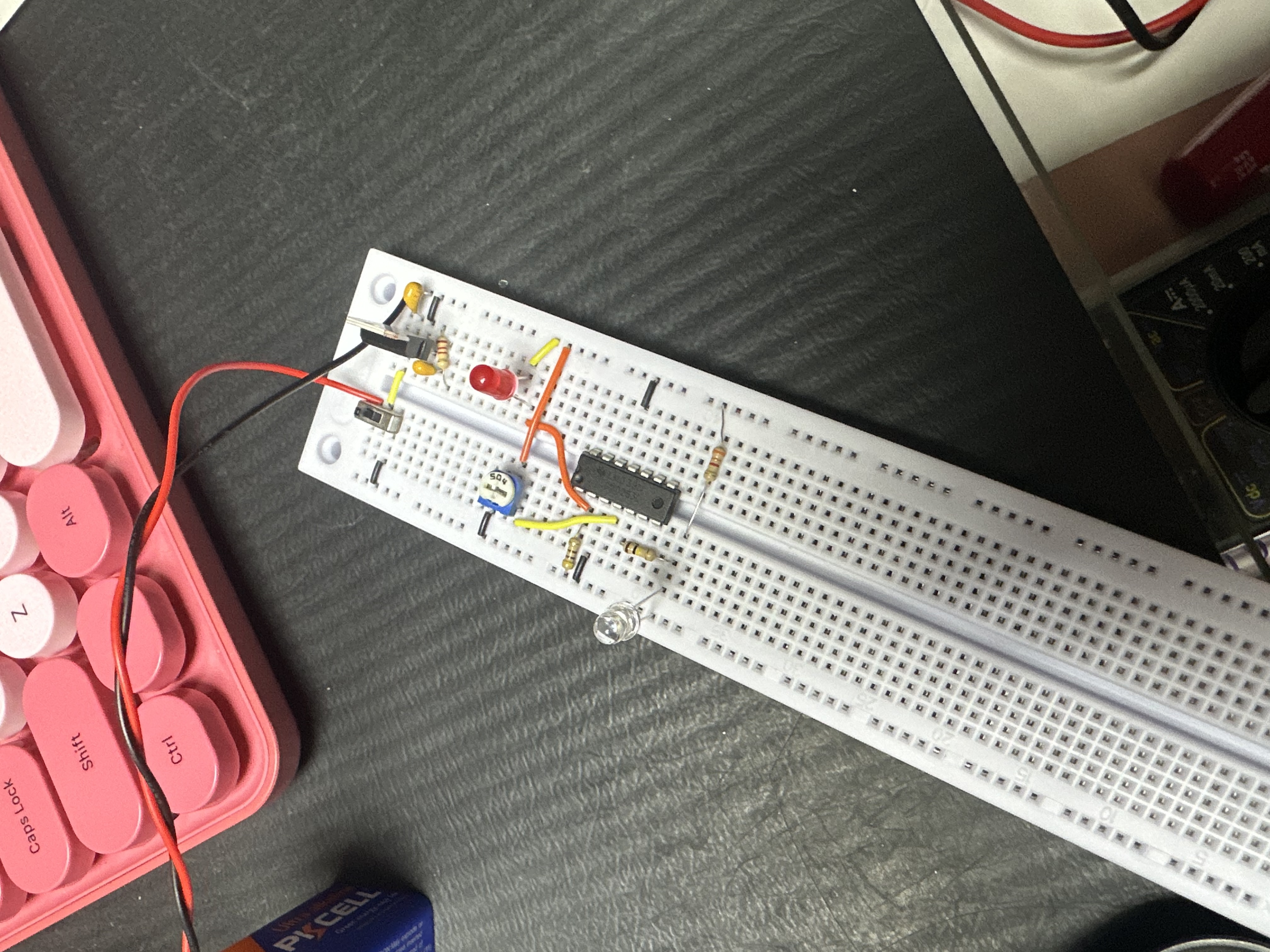
Circuit works when battery is fresh but stops working as it drains β€” is that normal?

Notice my LED astable blinker circuit runs great with a brand new 9V, but a few days later with the same battery (not dead, still reads about 7.5V) the blinking gets slower and the LED gets dimmer. Is that expected or is something wrong with my circuit?
TechCrate editorial answer
That's expected and nothing is wrong β€” LED brightness scales directly with supply voltage through Ohm's Law, so as your 9V battery sags toward 7.5V, current through the LED drops and it dims. A blink-rate slowdown alongside it usually means the sagging voltage is also affecting your oscillator's timing under load. Why the LED dims: brightness follows I = (V_supply βˆ’ V_LED_drop) / R. As the battery voltage sags, that shrinking numerator directly reduces LED current, so it dims β€” exactly as the math predicts, not a fault. See the full answer β†’
Want to see the full answer with all the details?

Unlock this and 100s of resources + your personal AI circuit trainer!
Safety & PowerTechCrate editorial answer

licking a battery?

what if i lick a 9v battery?
TechCrate editorial answer
Do not lick a battery. The danger is chemical, not electrical. A 9 V battery holds alkaline electrolyte (potassium hydroxide), and licking the terminals can put that caustic paste on your tongue and mouth: expect burning pain, redness and swelling, and in a bad case a chemical burn.

There is a second, more serious risk: a 9 V battery can lodge in your throat if it is swallowed, because its flat shape can catch in the narrowest part of the airway. That is a medical emergency.

If that happens: rinse your mouth with water and spit it out, do not induce vomiting, and get medical advice. If a battery was swallowed, treat it as an emergency and call emergency services or poison control straight away, because it may need to be removed urgently. See the full answer β†’
Want to see the full answer with all the details?

Unlock this and 100s of resources + your personal AI circuit trainer!
Safety & PowerTechCrate editorial answer

How many components can I safely plug into one breadboard power rail row?

Getting to more complex circuits now with several LEDs, a 555 timer, and a potentiometer all sharing the same red/blue power rails on one breadboard. Is there a limit to how much I can hang off one rail before something goes wrong?
TechCrate editorial answer
There is no universal safe component count or current rating for a breadboard rail. Limits vary with the breadboard, contact condition, jumper wire, connection length, and temperature. Use solderless breadboards only for low-voltage, low-current prototyping within the manufacturer's published ratings. See the full answer β†’
Want to see the full answer with all the details?

Unlock this and 100s of resources + your personal AI circuit trainer!
Safety & PowerTechCrate editorial answer

DC motor driver β€” do I really need a transistor, can I connect the motor straight to Arduino pin?

Want to spin a small hobby motor from an Arduino digital pin directly with digitalWrite HIGH. Seems like it should just work like an LED does. Do I actually need a transistor or driver chip in between?
TechCrate editorial answer
Don't connect the motor directly to the pin β€” you need a transistor or motor driver chip in between. Even a small hobby motor can draw 100-250mA or more (well beyond a pin's ~20-40mA limit) and generates a damaging voltage spike (back-EMF) when switched off that can destroy the Arduino's pin driver circuitry. Why LEDs are fine but motors are not: an LED with a current-limiting resistor draws a small, steady current, well under a pin's rating. A hobby motor draws far more, and spikes even higher at startup (stall/inrush current) or under load. The back-EMF problem: motors are spinning electromagnets. When power is cut suddenly, the collapsing magnetic field generates a brief high-voltage reverse spike that can destroy the delicate transistors inside the pin driver circuitry. See the full answer β†’
Want to see the full answer with all the details?

Unlock this and 100s of resources + your personal AI circuit trainer!
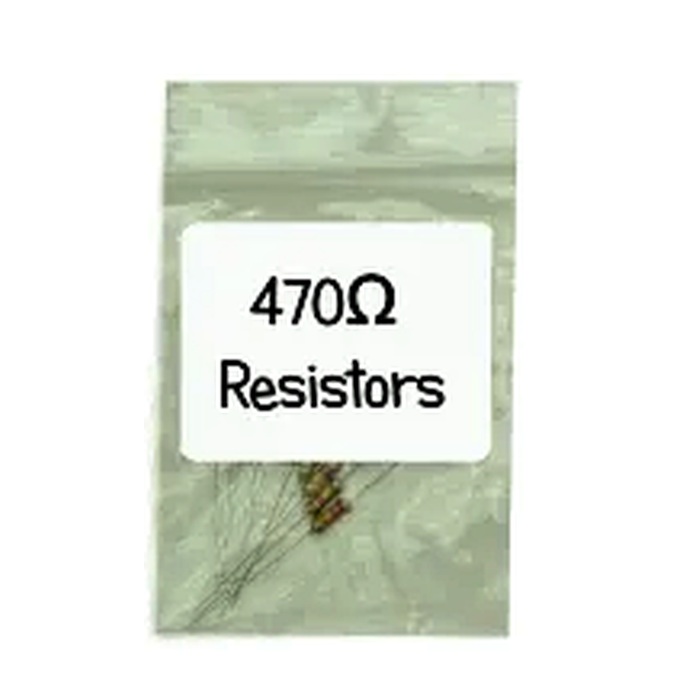
Safety & PowerTechCrate editorial answer

Experiment with two 555 timers β€” second chip gets very hot immediately

Following the book's dual 555 timer alarm circuit. First chip works fine and stays cool. Second one gets noticeably warm within a few seconds of power on, before I even finish wiring everything. Should I unplug it immediately?
TechCrate editorial answer
Yes, unplug it immediately β€” a 555 should stay near room temperature under normal operation, and rapid heating within seconds almost always means the chip is backwards, misaligned across the breadboard's center gap, or has power/ground reversed somewhere in the partial wiring. Most likely causes, roughly in order of probability:

1. The chip is inserted backwards or shifted across the center gap. This is the single most common cause. See the full answer β†’
Want to see the full answer with all the details?

Unlock this and 100s of resources + your personal AI circuit trainer!
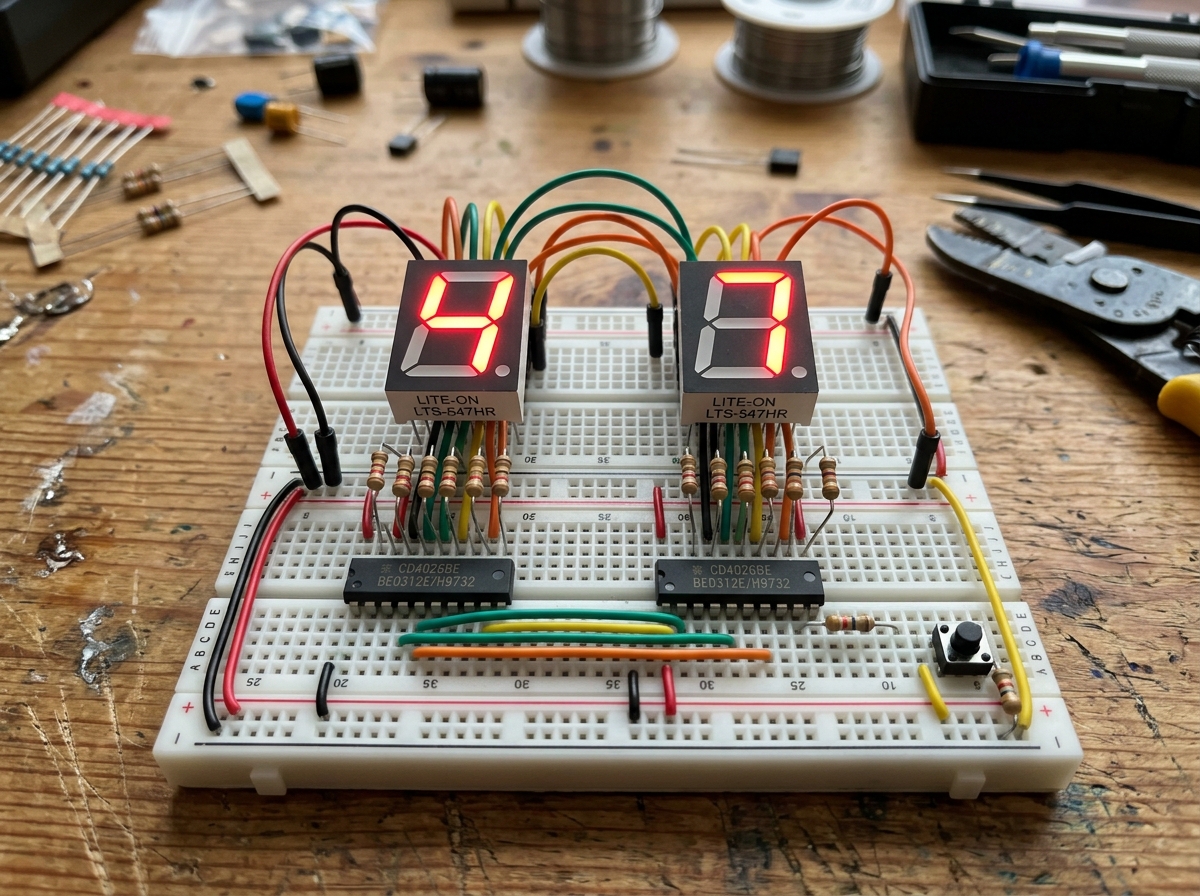
Safety & PowerTechCrate editorial answer

Making an LED brighter without burning it out β€” is there a safe max current?

Currently running my LEDs pretty dim with a 1K resistor because I'm nervous about burning them out. Book uses smaller resistors like 220-330 ohm for brighter LEDs. What is actually the safe range and how close to the edge can I push it?
TechCrate editorial answer
Standard 5mm LEDs are rated for about 20mA of continuous forward current, and your 1K resistor is only delivering around 7mA β€” dropping to 330-470Ξ© would get you close to that 20mA ceiling for a noticeably brighter LED while staying safely within spec. Calculating with Ohm's Law:

R = (V_supply βˆ’ V_LED_forward_drop) / I_desired

For a red LED (~2V forward drop) on 9V, targeting the max-safe 20mA:

R = (9V βˆ’ 2V) / 0.02A = 350Ξ©

That's why 330Ξ© is close to the max-brightness-while-safe zone the book uses. Your 1K gives roughly I = (9V βˆ’ 2V) / 1000Ξ© = 7mA β€” well under the limit, but dimmer. Where the danger zone actually is:
β€’ Well under 20mA (your current 7mA): totally safe, just dimmer.
β€’ Right around 20mA: the sweet spot most hobby circuits target.
β€’ 25-30mA momentarily: many LEDs survive brief excursions, but lifespan shortens.
β€’ 40mA+ sustained, or no resistor at all: this is where LEDs actually burn out, sometimes within seconds. See the full answer β†’
Want to see the full answer with all the details?

Unlock this and 100s of resources + your personal AI circuit trainer!
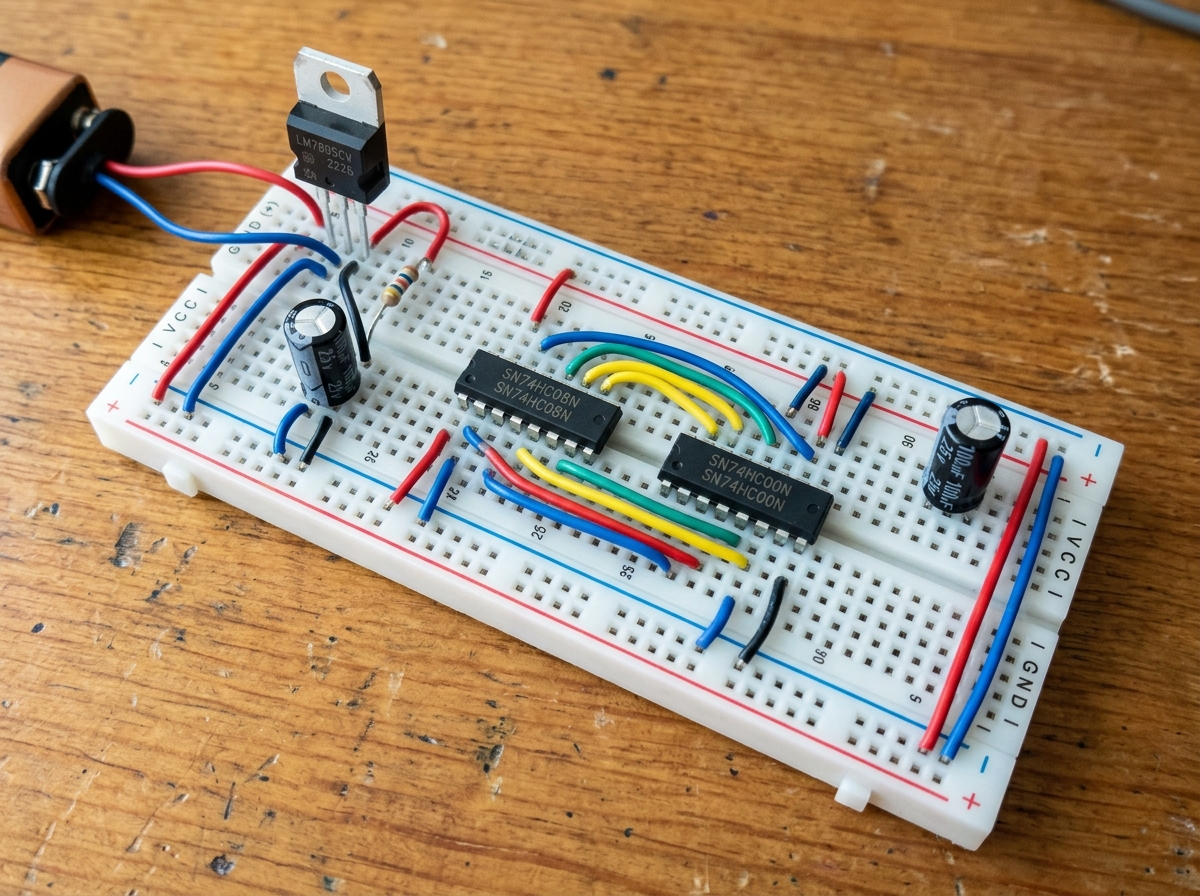
Safety & PowerTechCrate editorial answer

Power supply wall adapter β€” how do I know if it will damage my Arduino?

I have a bunch of old wall adapters from other electronics lying around and want to use one to power my Arduino instead of USB. How do I know which ones are safe to use and which will fry the board?
TechCrate editorial answer
Look for four things on the label: DC output (not AC), 7-12V (9V is ideal), center-positive polarity, and a barrel plug around 2.1mm β€” if all four check out, it's safe to use on the Arduino's barrel jack. Breaking those down:

1. Output voltage. Arduino boards accept 7-12V DC through the barrel jack; the onboard regulator steps it down to 5V. Avoid anything above 12V (regulator overheating risk) or below 7V (brownout/reset risk from lack of headroom). 2. AC vs DC. The label says either "AC/AC" or "AC/DC" β€” you want DC output. An AC-output adapter (common on old phones/answering machines) can cause real damage on a DC barrel jack. See the full answer β†’
Want to see the full answer with all the details?

Unlock this and 100s of resources + your personal AI circuit trainer!
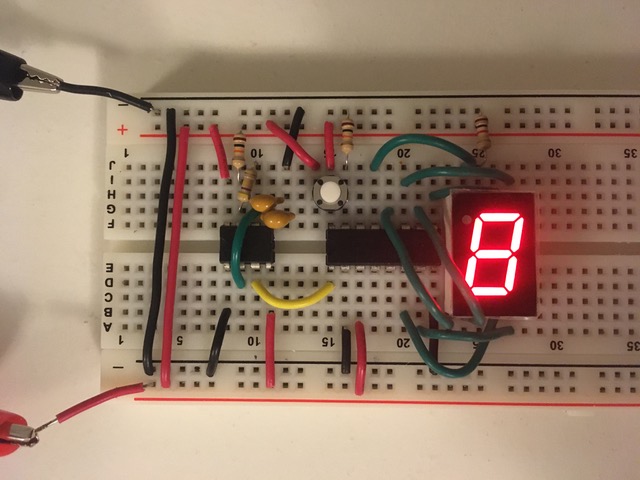
Safety & PowerTechCrate editorial answer

Static discharge β€” worried I damaged an IC by touching it

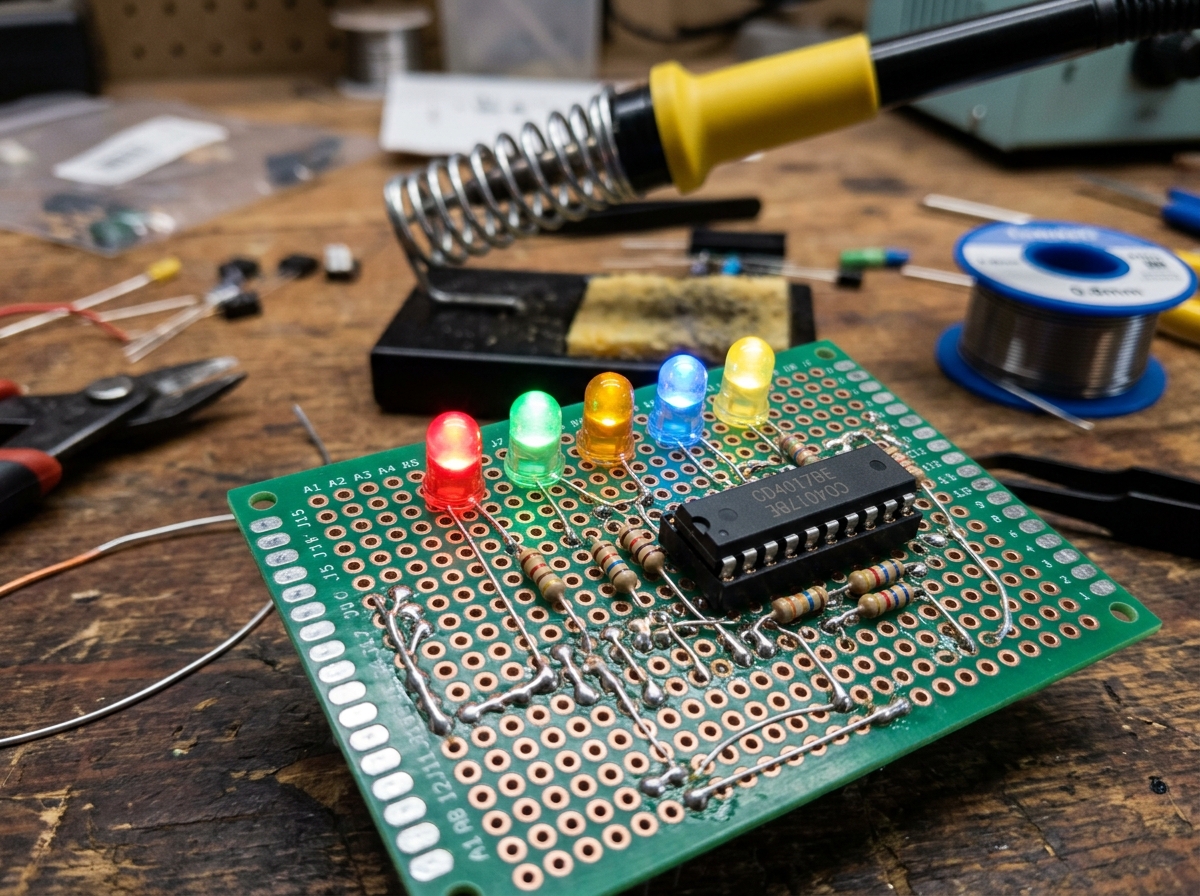
Just got a bag of CD4017 decade counter ICs delivered. Before I even opened the antistatic bag, I touched a doorknob for some other reason, then later handled the chip normally without a wrist strap. Did I fry it just by picking it up?
TechCrate editorial answer
Your CD4017 is almost certainly fine β€” touching the doorknob first actually discharged your body's static buildup, functioning as an improvised grounding step, and simply holding a chip by its plastic body with dry hands carries low ESD risk. How ESD damage actually happens: CMOS chips have extremely thin oxide layers inside their input gates that can be punctured by static discharge, but this requires you to be *carrying a charge* and then discharge it through the chip's pins at the moment of contact. See the full answer β†’
Want to see the full answer with all the details?

Unlock this and 100s of resources + your personal AI circuit trainer!
Want the full workbench?

Choose digital access or add the monthly hardware crate.

Digital VIP Β· $4.99/moCrate + VIP Β· $14.99/mo

Free Shipping

On orders over $50

Fast Shipping

Ships within 24 hours

Secure Checkout

256-bit SSL encrypted

Family Owned

Since 2013 in Pine Hill, NJ

Follow us for tutorials, product demos, and maker inspiration!
Added to Cart!