-->

Beginner Basics Questions & Answers

BUILD LEARN SHARE

Turn β€œwhy won’t it work?” into your next working circuit.

Follow a practical learning path, search real troubleshooting answers, share your builds, and keep reliable bench references close at hand.

Subscriber workbench
33answered questions
10maker builds
12+learning resources
Pick a starting point

Choose your maker path

Focused guides connect the concepts, tools, and safety checks needed for a confident next build.

Maker challenge: Build a safer, cleaner breadboard power layout

Label the rails, add current limiting, verify polarity, then share one improvement you made.

Community knowledge bench

Find an electronics answer

Search by symptom, part, or project. Every editorial answer is visible for makers and search engines.

Beginner BasicsTechCrate editorial answer

Interfacing 3.3V Microcontrollers (ESP32/Raspberry Pi Pico) with 5V Sensors

Can I connect a 5V sensor output directly to a 3.3V microcontroller pin without destroying it?
TechCrate editorial answer
No! Connecting a 5V signal directly to a non-5V-tolerant 3.3V microcontroller pin (such as ESP32, STM32, or Raspberry Pi Pico) can instantly fry the internal ESD protection diodes and damage the pin. To bridge 5V and 3.3V logic safely, use a bi-directional MOSFET logic level converter module or a resistor voltage divider. See the full answer β†’
Want to see the full answer with all the details?

Unlock this and 100s of resources + your personal AI circuit trainer!
Beginner BasicsTechCrate editorial answer

How to Read Oscilloscope Waveforms & Voltage Traces

What is the difference between peak-to-peak voltage (Vpp) and RMS voltage on an oscilloscope trace?
TechCrate editorial answer
When measuring AC waveforms (like sine waves from an audio signal or square waves from a 555 timer) on an oscilloscope: Vpp (Peak-to-Peak Voltage) measures the total vertical distance between the highest positive peak and the lowest negative peak. RMS (Root Mean Square) voltage measures the equivalent DC voltage that would deliver the exact same electrical power to a resistive load. For a pure sine wave: V_rms = 0.707 * V_peak. See the full answer β†’
Want to see the full answer with all the details?

Unlock this and 100s of resources + your personal AI circuit trainer!
Beginner BasicsTechCrate editorial answer

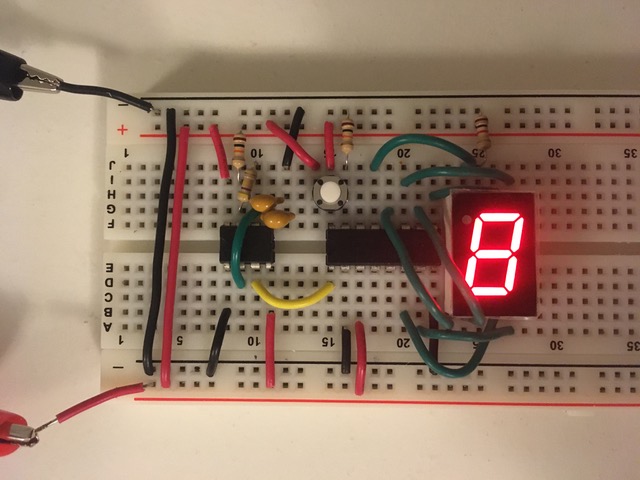
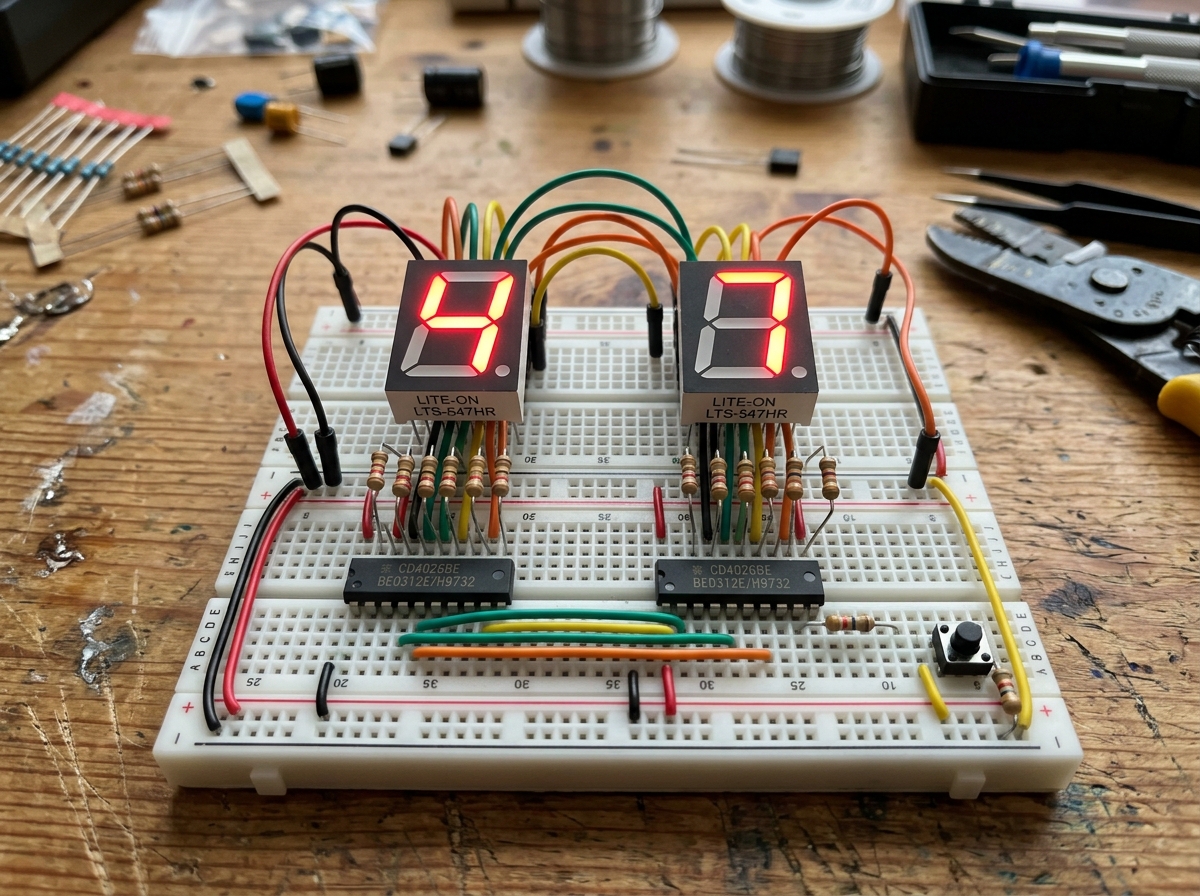
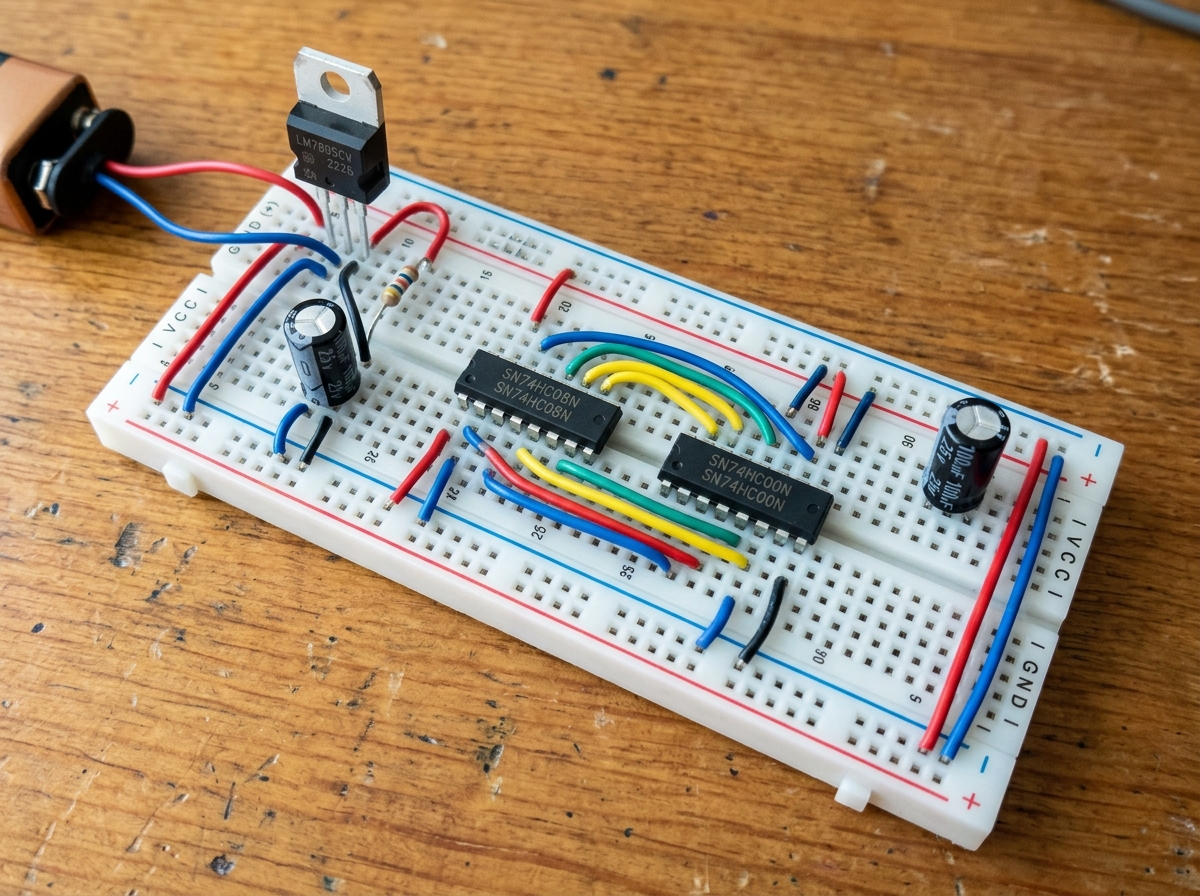
What did I do wrong this is from make more...

What did I do wrong this is from make more electronics experiment 6 i think i had a wire in the wrong hole!?
TechCrate editorial answer
Yes β€” the issue is almost certainly a component or wire landing in the wrong breadboard row: something sits in the row above or below where your circuit actually needs it, which breaks the connection since each group of five breadboard holes is only electrically joined to the other holes in that same row, not to rows above or below it. See the full answer β†’
Want to see the full answer with all the details?

Unlock this and 100s of resources + your personal AI circuit trainer!
Want the full workbench?

Choose digital access or add the monthly hardware crate.

Digital VIP Β· $4.99/moCrate + VIP Β· $14.99/mo

Free Shipping

On orders over $50

Fast Shipping

Ships within 24 hours

Secure Checkout

256-bit SSL encrypted

Family Owned

Since 2013 in Pine Hill, NJ

Follow us for tutorials, product demos, and maker inspiration!
Added to Cart!